Build performance
Everything works. You simply want more.
You don't wait for a problem to train strength, endurance or coordination. FPC brings the same performance mindset to pelvic-floor function under movement.

For some men, everything already works and they want more. For others, things become less reliable with a partner. FPC trains pelvic-floor function
under movement.
You don't wait for a problem to train strength, endurance or coordination. FPC brings the same performance mindset to pelvic-floor function under movement.
Movement, position and support add physical demand. Pressure, attention and anxiety can add another layer.
Take the FPC Self-Test and find out.
No pass or fail. What you notice here tells you where to begin.
Share it with someone you trust and compare what you noticed.
When you're supported and still, there is less for the body to manage. Add movement, changing support and attention, and the task becomes more complex.
Finding a clear pelvic-floor activation while still is one thing.
Keeping it clear while the body moves is another.
Two tracks run at the same time: continuous pelvic movement and an independent pelvic-floor activation and release cycle.
Pelvic movement continues throughout.
Activation and release follow their own rhythm.
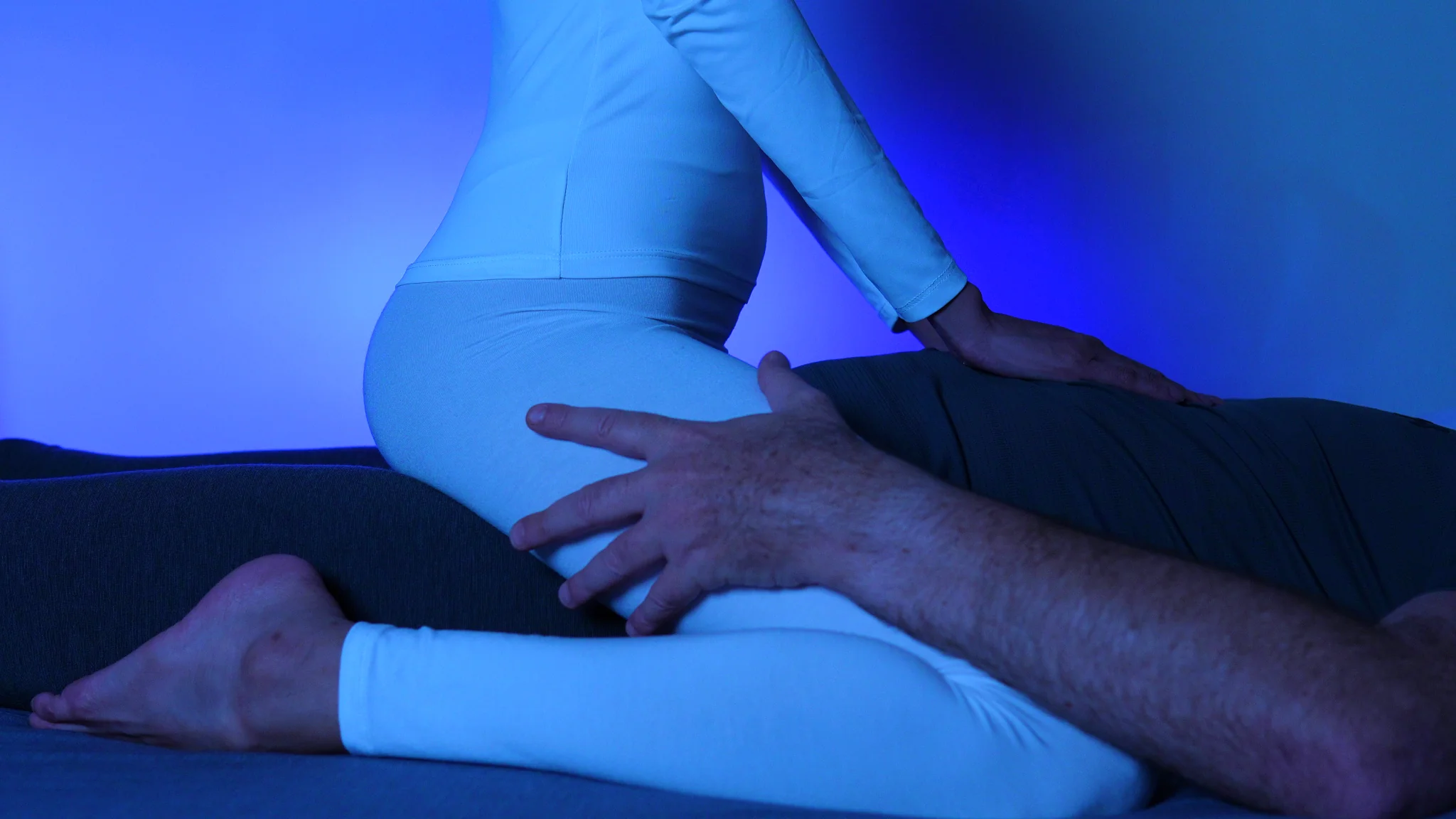
A support base is the primary way the body is supported while the pelvis moves. FPC trains the same Dual-Track across three different support bases.
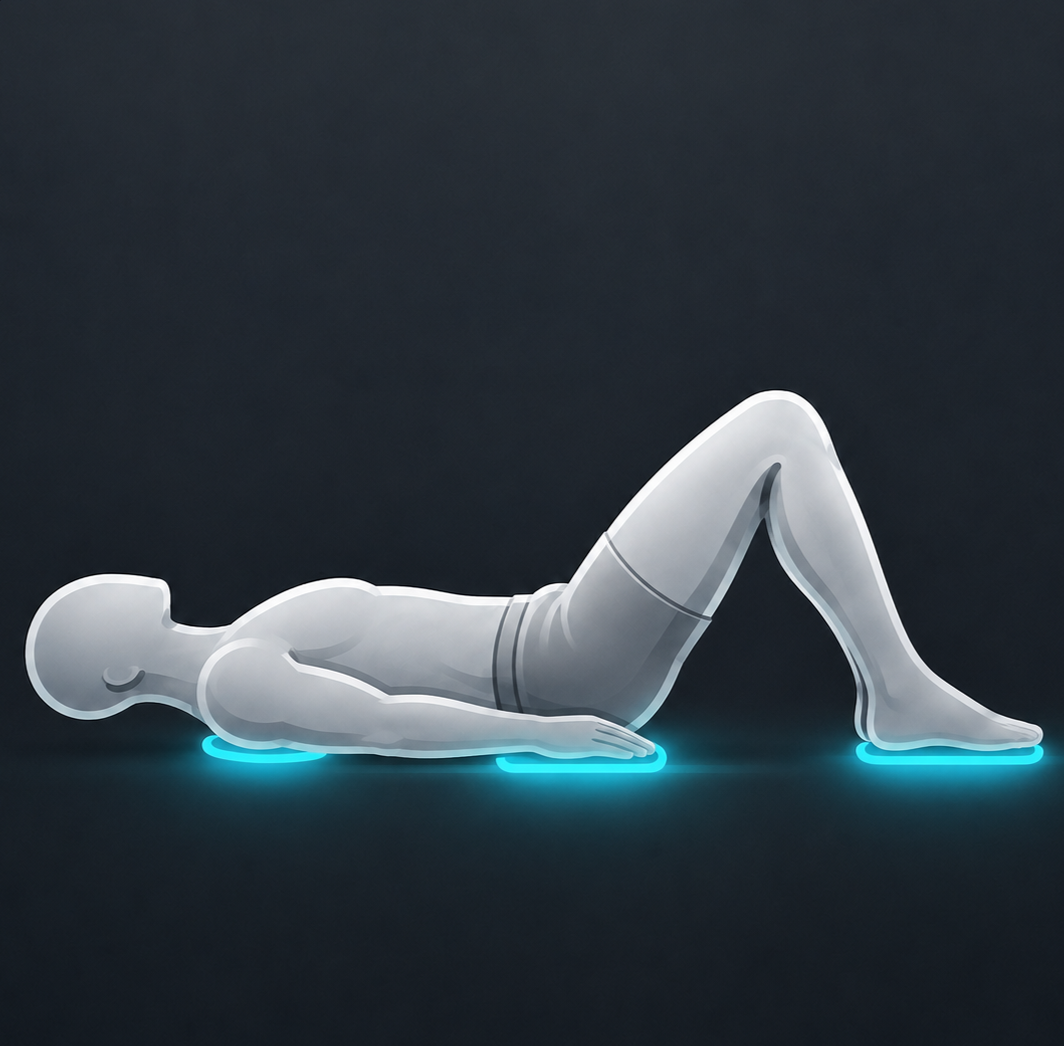
With the pelvis supported, the surface does more of the supporting while pelvic movement continues.
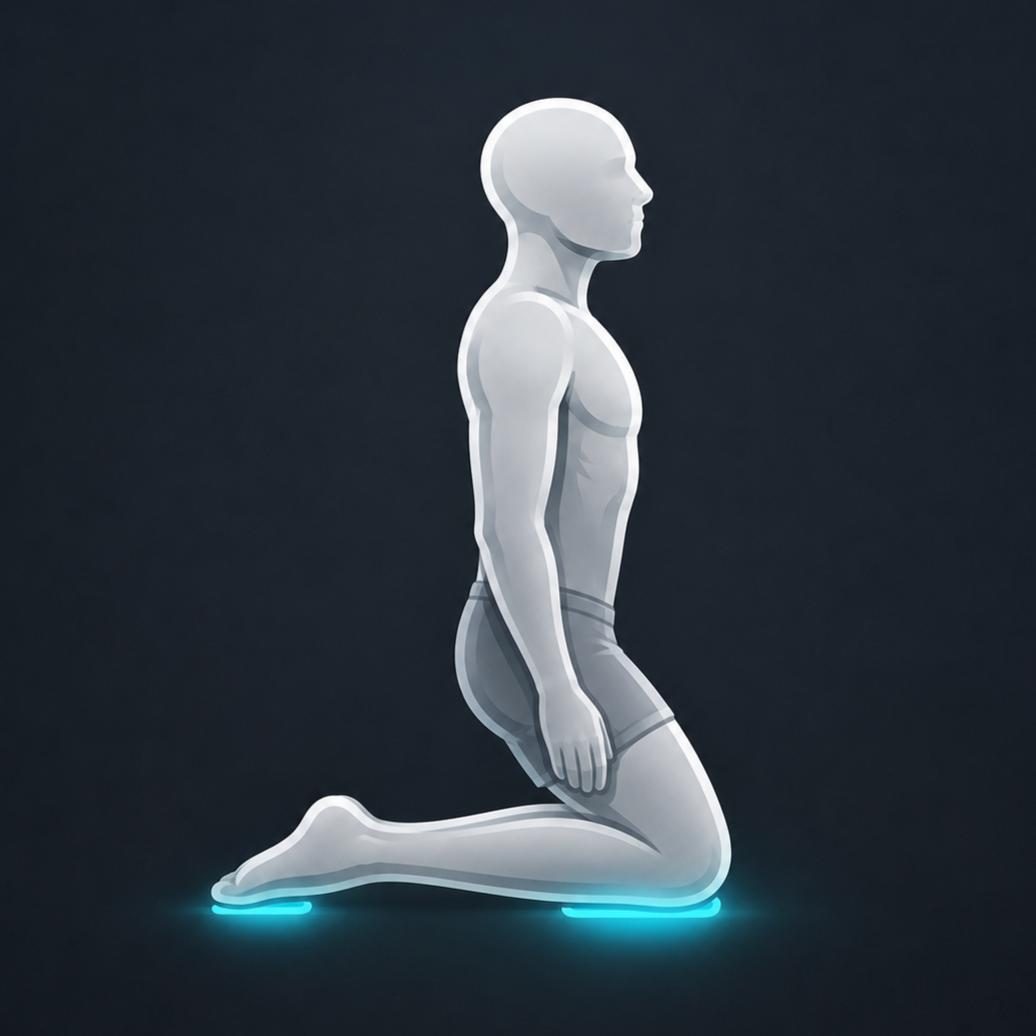

With the knees as the support base, the hips and trunk have more to manage while pelvic movement stays clean.
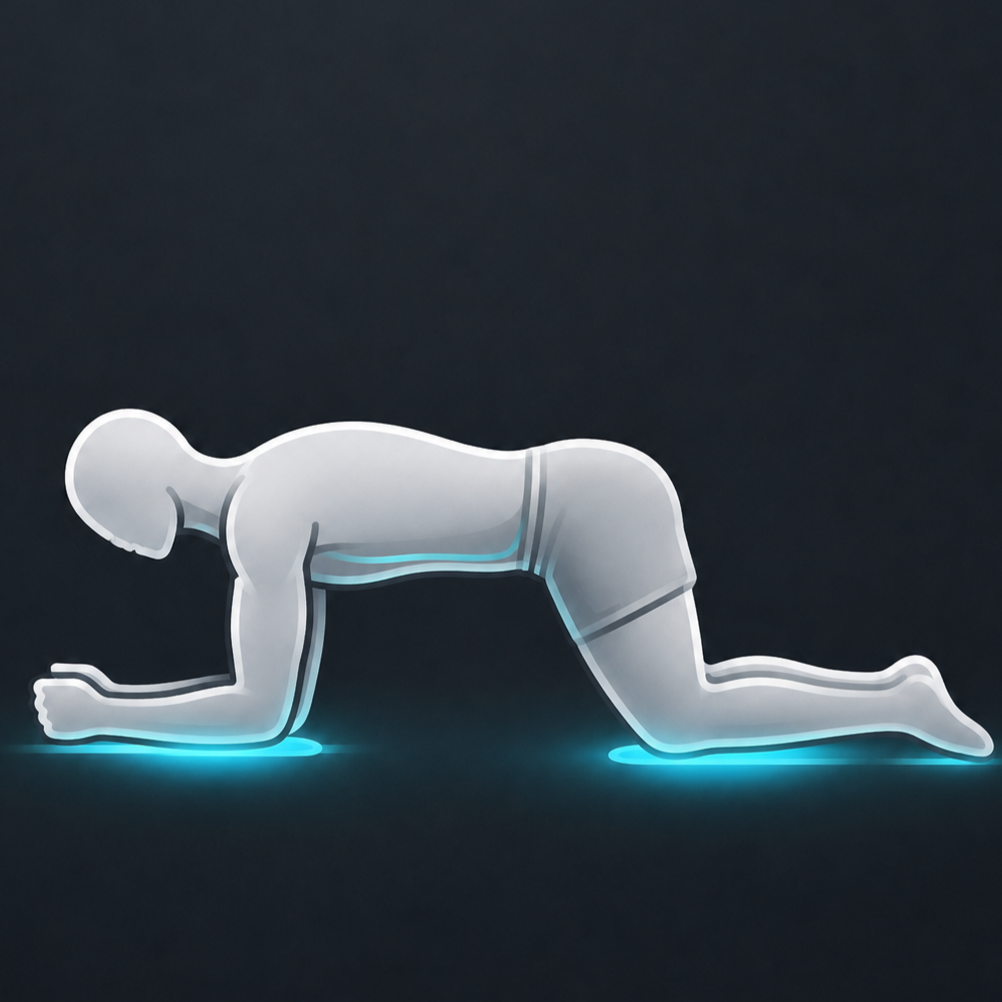
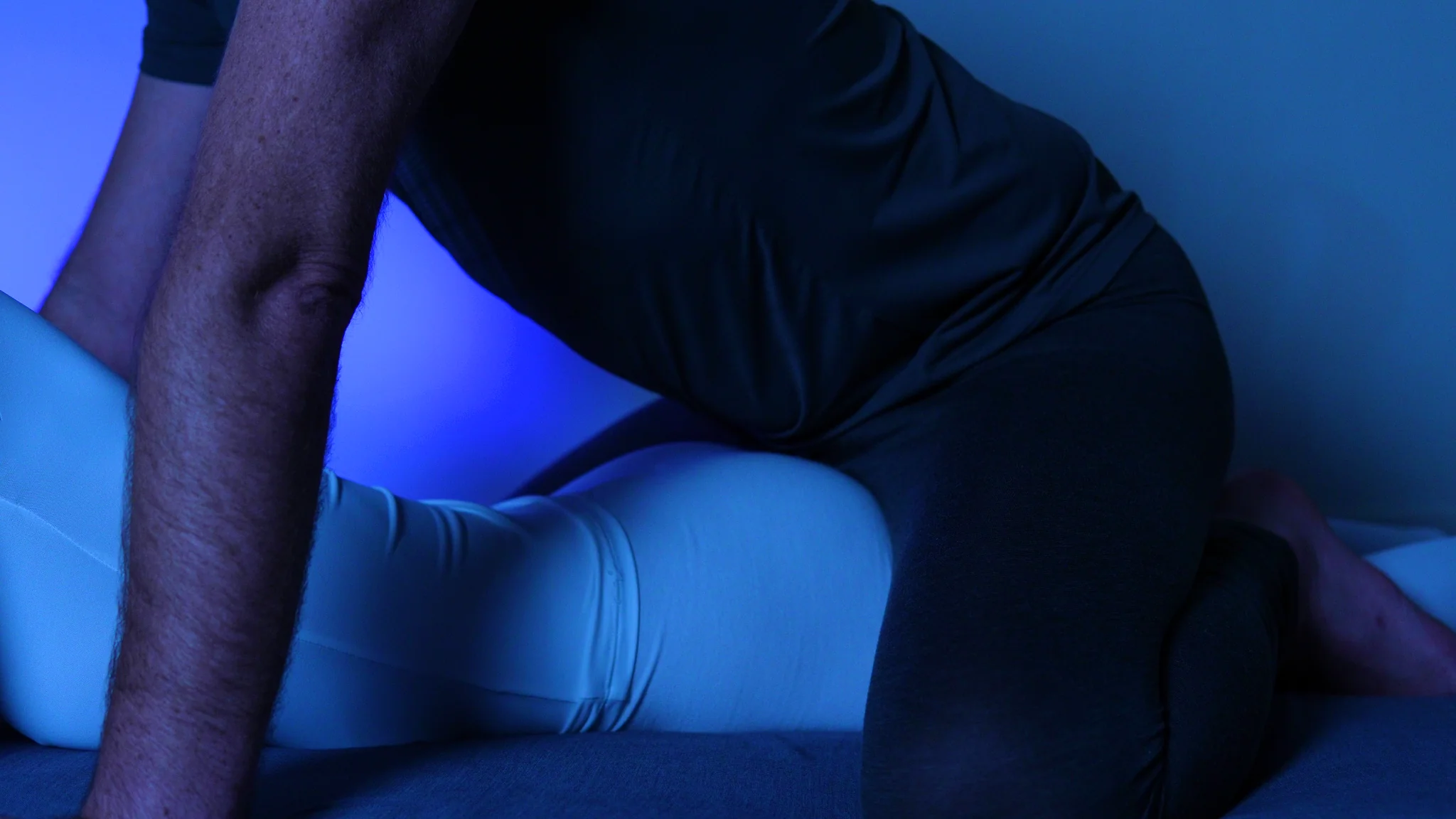
With the front of the body joining the support, the challenge is to use that support without letting bracing take over.

FPC began in 2019 during a men's pelvic-floor rehabilitation course at Beilinson Hospital in Israel, run by the Israeli Physiotherapy Society. Ofer brought the original idea to the course coordinator, Eli Gabay, BPT, a physiotherapist who specialises in male pelvic-floor treatment and teaches in the field, and they developed the early material together.
The original framework was published as a Hebrew book by Focus in 2020. FPC has continued to evolve since then.
Prof. Jack Baniel, after noting that medication had not solved all problems in this field, wrote:
“Functional training, in which the man takes charge of his problems, is therefore an extremely important approach for those suffering from erectile dysfunction.”Director of the Urology Division
The complete FPC protocol itself has not yet been tested in a clinical trial. Further research is required.
SELECTED SCIENTIFIC REFERENCESStatic-Dynamic Gap, Dual-Track, Self-Test and safety.
Nine drills across three support bases.
Movement, timing and sequence in one complete training session.
Troubleshooting, transfer, medical considerations and maintenance.
The nine drills train support and movement patterns that can carry across multiple position variations.
Yes. From the beginning, FPC was designed primarily for men who already function well and want to train pelvic-floor control under movement and changing support.
You don’t need to have a dysfunction to train a skill.
The physical task can change with a partner. Movement begins, support changes, positions change, and attention is no longer focused only on the body.
FPC trains the pelvic-floor component under those changing physical demands.
Sometimes that is the main issue. Sometimes pressure or anxiety adds another layer.
Pressure and anxiety can affect attention, breathing, muscle tension and movement.
FPC does not treat anxiety itself. But practice can also provide a low-pressure rehearsal environment - a way to become more familiar with movement, changing positions and maintaining control before those demands appear with a partner.
The mind may be busy. The body still has a task.
Some men need to rebuild a clear pelvic-floor activation and release before adding movement to it.
If you are recovering from pelvic surgery, have pelvic pain, cannot comfortably relax the pelvic floor, or are being treated for a condition affecting pelvic, urinary or sexual function, speak to a pelvic-health physiotherapist or your doctor before starting.
FPC adds movement to basic pelvic-floor control. When those basics are not yet clear, they come first.