FPC Training
A New Functional Approach for Male Performance
The full FPC training program launches soon. Join the early-access list below.
Where FPC Comes From
FPC was first presented in 2019 at an annual physiotherapy conference in Israel.
It later evolved into a published book and a structured training method.
This site presents the framework behind the method — including load profiles and the Dual-Track mechanism.
Developed by Ofer Sela, BPT
Physiotherapist specializing in Men’s Pelvic Floor, Israel
Introduction
FPC (Functional Pelvic Contraction) is a biomechanically grounded training system that addresses the core weakness of traditional male pelvic exercises: they train static control, not dynamic performance.
FPC replaces isolated squeezing with position-specific movement patterns, pressure management, and neuromuscular timing – training your body for the real demands of active intimacy.
What FPC Actually Is
Unlike Kegels, which train a single muscle through static squeezes, FPC is a functional movement system that develops rhythm, pressure control, and coordination across the pelvis, hips, core, and pelvic floor.
It's not "better Kegels" – it's a completely different model built around real biomechanics, not theoretical isolation.
3 Load Profiles
Different positions create different mechanical demands on the pelvis. These demands are structural, not psychological.
FPC is built around three primary load profiles that determine how control must be maintained during intimacy.
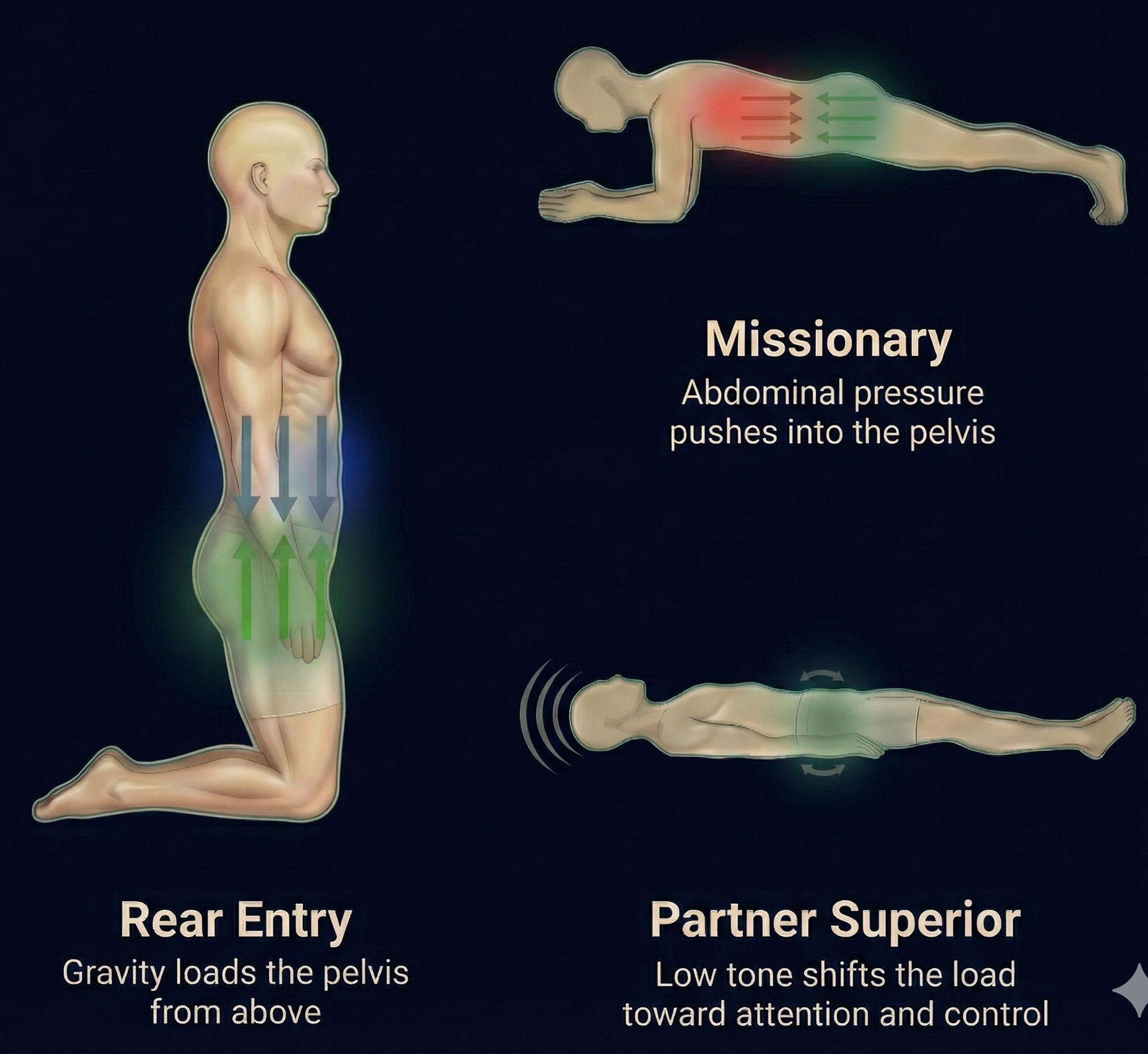
These load profiles describe how force, pressure, and stability demands change across positions.
Dual-Track Mechanism
Once load is understood, the next challenge is maintaining control during movement. FPC addresses this by training two independent systems at the same time.
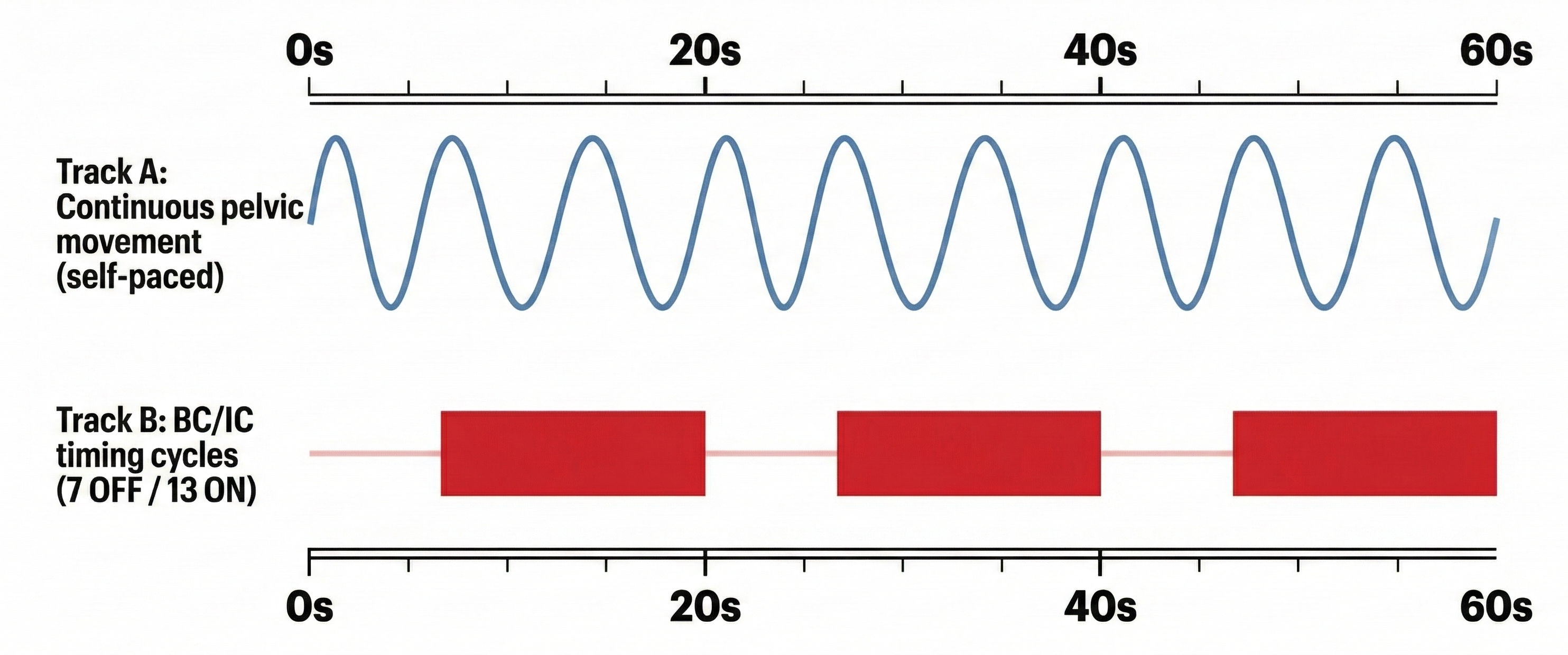
Track A: Continuous pelvic movement
Track B: Timed pelvic-floor activation
The objective is dissociation: movement continues smoothly while activation remains deliberate and controlled.
This mechanism bridges the gap between static pelvic training and real-world performance.
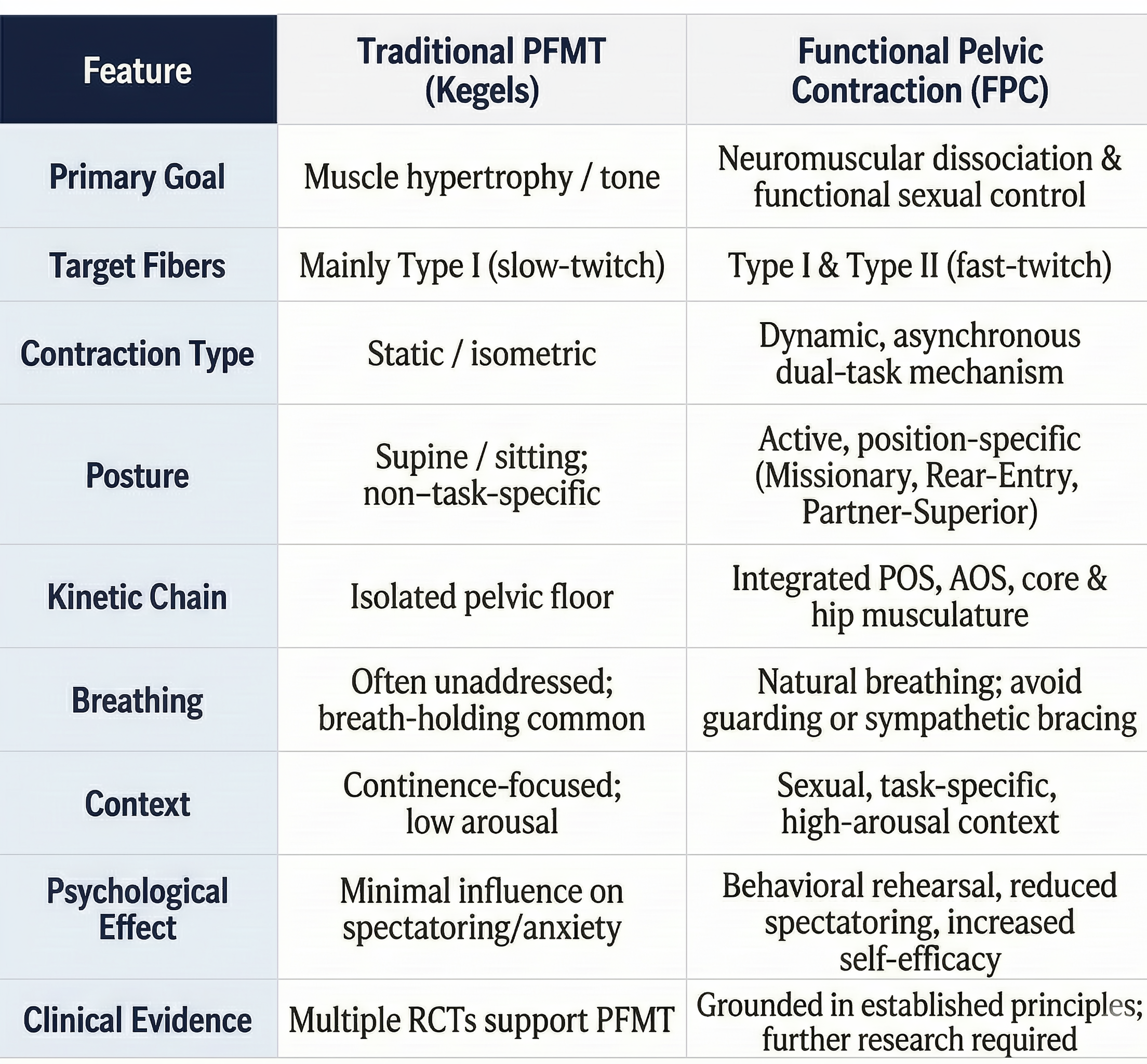
FPC vs Traditional PFMT (Kegels)
Traditional pelvic-floor muscle training focuses on isolated contraction in stillness. FPC treats pelvic-floor control as a functional motor skill—trained under load, through movement, and across real positional demands.
The table below highlights the structural differences between the two approaches.
What FPC Improves
PHYSICAL PERFORMANCE
- Position-specific pressure control
- Fatigue-resistant hip, core, and pelvic-floor mechanics
- Stability that supports erection quality
NEUROMUSCULAR CONTROL
- Rhythm and timing under motion
- Pelvic-floor activation without over-bracing
- Improved sensory awareness during arousal
PSYCHOLOGICAL EASE
- Smoothness, control, and consistency
- Reduction of "freeze response" and excess tension
Email Signup
Get notified when the full FPC training program launches.
Your email will only be used to notify you about the FPC training launch and related updates.